When I was a young boy, from about 5 to 13 years old, I used to dream horrible nightmares that would wake me up in the middle of the night. For those 7-8 childhood years, the nightmares themselves centered around Chucky the Doll (do not recommend), a film that I had accidentally watched (a family debate still exists as to how exactly I ended up watching that but that’s neither here nor there).
Fast forward to present day.
I’m 36 years old, still get nightmares.
However, these days, my nightmares are less fictitious.
There’s no killer doll.
There’s no spooky monster.
There’s no serial killer.
Instead, my nightmares revolve around more realistic scenarios.
This nightmare from this morning in particular was a bit more plausible (not possible) scenario. In this nightmare, my (now ex) wife and I were laying in bed next to one another and I told her that I will see her in (marital) court on November 28th (in reality, this is a real date set my the court system in the United Kingdom after countless efforts with trying to resolve a financial settlement but I digress) and her response was:
“Good luck. I’m pregnant again.”
Even in my sleep state, the notion of being stuck in that relationship terrified and triggered me enough to the point that I shot up from my laying position, waking up, gasping for air. The idea of being stuck in a relationship from someone that I am actively trying to distance myself from gives me the chills.
So recognizing it was way too early in the morning, I shut my eyes closed, drew in a few breathes, and gently fell back asleep for another 90 minutes, until 5:30am, my normal wake up time.
Adult fears.
The importance of psychologically safe dance spaces.
Note: Although this blog post centers on psychologically safe spaces for dance studios, I think that that this concept more generally applies to other environments including the corporate world as well.
This post is more of a stream of consciousness so bare with me here.
I started my dance journey in February 2023 (a little over a year ago at the time of this writing) and (long story short) discovered “The Beacon”, a dance studio located in Seattle Washington (USA). It’s my second home.
Really.
I fell in love not only with the studio, but with the people, the community. If the closest thing I have to attending church. I feel honored and considered some of the instructors and leaders in the space as friends, who ultimately cultivate what I consider a psychological safe space. A place to be witnessed. To be seen. A place to “be yourself” with no judgement.
A psychologically safe dance space is not something I take for granted anymore. I can confidently say that, since moving to London in April 2024 and visiting half a dozen studios.
I’m writing about this topic because more times than I can count, someone has told me that I was “brave” for jumping into the cypher, despite there being arguably more experienced and more skilled dancers surrounding the circle. While I do feel flattered, and feel proud for the progress I’ve made, I feel comfortable jumping because of my experiences The Beacon (mentioned above).
In that studio, a “safe” space is cultivated. It is intentional. It does not happen by chance. In fact, here’s a little interview I conducted with Seattle Legend Tracey Wong (below) and how she deliberately creates the environment:
Like many others walking this earth, I am currently in a state of transition. The divorce (which started last November) is almost coming to an end (won’t be diving into it here since the topic itself deserves its own post) and I’m finding myself constantly asking the following two questions:
As Kit Laughlin shared in his podcast interview, the latter question is just as effective. By practicing asking yourself daily, I believe that I’m inching myself towards (for lack of a better word) actualization.
At the moment, here’s what I don’t want to do:
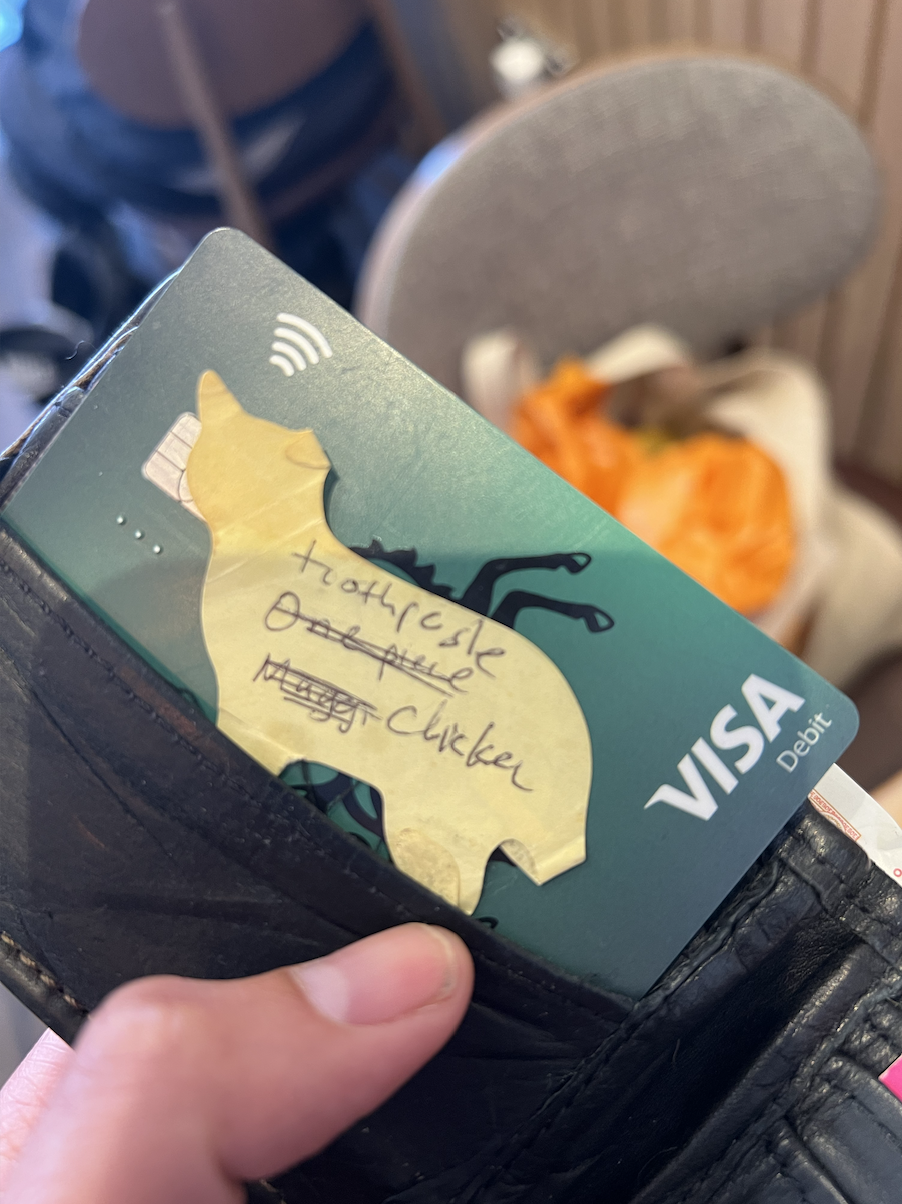
Ever find yourself frustrated that you forgot to pick up something from the grocery store? I cannot tell you the number of times I’ve experienced frustration when I returned home, after forgetting to pick up some item (e.g. ketchup), despite writing down the item on a sheet of paper that I ultimately forget is neatly tucked away in a jean pocket.
But lately, I’ve been experimenting with a solution I came up with that seems to be working pretty consistently without fail over the last month.
It’s simple: I write down the item on a sticky note and then attach the sticky note to my credit card that lives in my wallet.
Before elaborating on this particularly unique solution, here are some other attempts:
In a nutshell, with all the solutions presented above, the problem really boils down to forgetting about the solution itself.
Instead of relying on good intentions, like my memory, having some sort of trigger to prompt me. So me paying for my credit card (at the moment) always happen so I piggy packed on that.
Ultimately, this solution of mine is a fail safe. Because although I do write down a longer list of items on a single sheet of paper, the item(s) on the post-it fail to make their way to the single sheet of paper, for many reasons.
Again, this solution works … for me given my assumptions (e.g. paying with physical credit card) and circumstances. Even so, as a practice of improving my organization skills, I evaluated my solution using the POET compass in terms of how well my solution presents, how well it stays off my mind, how accessible the solution is, and how much I trust it. More on this below.
As mentioned in more recent blog posts, I am currently enrolled in an online course called “Waves of Focus” (see this blog post for more details). And one tool I been incorporating into my daily life is the POET compass, a way to evaluate your “organization” solution.
Yes, the solution in itself uses a label and works well as a visual trigger. As soon as I whip out my wallet and see a sticky note attached, I’m reminded that there’s at least one item I’d like to buy while at the grocery story.
Invisible? Yes! The label itself is slapped onto my credit card, which is tucked away and out of sight and out of mind, sitting in my back pocket.
Is it Instant? Yes, in the context of grocery shopping, I pay with my card (not apple pay or any other mechanism). So retrieving the sticky is as easy as retrieving my card from the wallet.
Off of mind. I would say for this particular scenario (of going to the grocery store and trying to remember to purchase something) that being trusted is probably the most important criteria (within the POET compass). After jotting down the items and attaching the sticky note to my card, I simply can forget.
I’ve been using this solution for a little over 4 weeks and appears to be working well. This solution (like many others) was born out of frustration. And while I still practice self-compassion and take it on myself, frustration is a normal and common feeling that I’m learning to listen to more, allowing myself to detach and and step back and brain storm (unique or not) solutions for my problems.
As mentioned in previous posts, I used to write up daily reviews for myself and stopped posting on my blog all together after I tried to convert this website into a “professional” website with the intention of building a pipeline of “followers.” To be clear: nothing is wrong with professional websites that are designed to drum up business. However, what I didn’t recognize at that time was that (and only starting to realize now) is that — counter what other people have perceived — I’m motivated by social acceptance. In other words, I’m highly driven to reduce rejection, criticism.
Okay, with that now out of the way.
I’m taking a moment to pause, to breath, to draw in a few deep breathes and reflecting because I’m noticing that the last couple weeks, months really, it feels as though my brain is more scattered, firing off on a hundred cylinders. To elaborate, my levels of “productivity” are at a all time low. When I say productivity, I’m strictly referring to my consulting business, referring to direct income (“cash”) generating activities. Because outside of that, I’m finding myself filling the day with:
But … Maybe I’m burned out.
Maybe I’m overwhelmed with the transition from a married man to a single father.
Maybe I’m still grieving over the lost of my relationships, friends and family, back in the states.
Likely, a combination of all three (and others as well).
At the same time, I’m rooted in gratefulness. Just this morning, I was listening to Eminem’s “Mocking Bird”, a song that I used to listen on repeat when it was first released (20 years ago). The song somehow surfaced to Spotify playlist. Regardless, as I was listening to the song while walking the dogs back home from their morning walk, I found myself stopping in the middle of the side walk, tears forming in the corner of my eyes, a few lines in the song really hitting home:
Now I’m sitting in this empty house just reminiscing
Looking at your baby pictures, it just trips me out
…But things have got so bad between us, I don’t see us ever being
Together ever again, like we used to be when we was teenagers
But then, of course, everything always happens for a reason
I guess it was never meant to be
But it’s just something we have no control over, and that’s what destiny is
I took a private house dance lesson with Ani and below is a 30 second clip condensed version of our 1 hour private. I had originally reached out to her and asked for a private lesson after struggling in her House Beginner/Intermediate class. In particular, I fumbled with the pas de bourree torso isolation as well as some other grooves that she helped break down. The lesson itself took place at Central Saint Martins (CSM) in London. This was my first lesson that took place outdoors, in public. At first, I felt a bit shy and nervous, since tourists and people in general would walk past by us. But after the first couple minutes, the anxiety wore off and the rest of the private lesson was amazing.
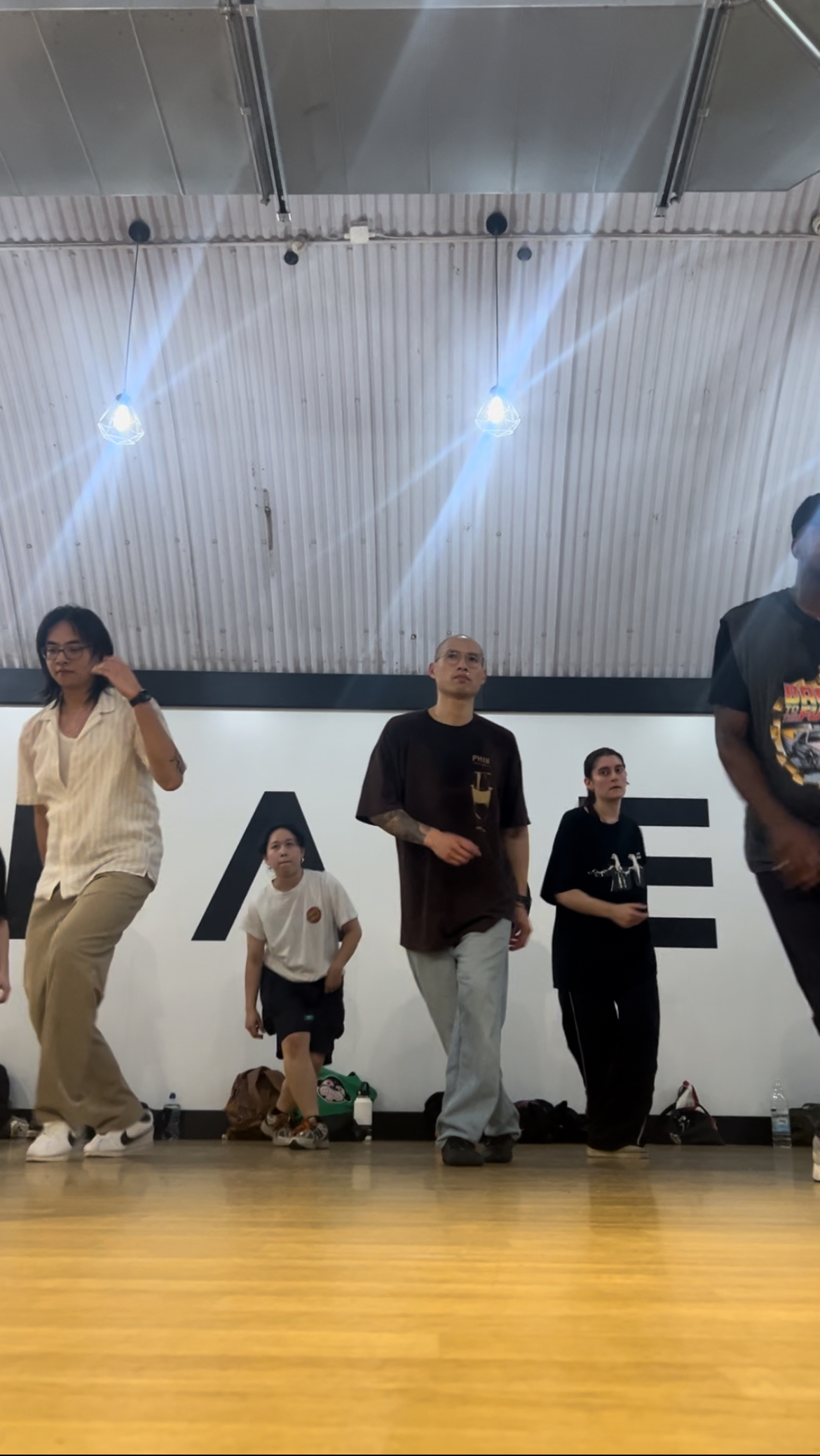
Took the class yesterday night and while still fresh in my mind, brain dumping.
Best part of the class for me was witnessing my freestyle classmate light up with joy midway through her freestyle round when she went for a move, caught a groove, and her face beamed up.
Note: As usual, I’m recalling the choreography from memory and there are details missing including the counts, how the moves relates to the music (big component), and so forth.
Right kick and slide back
Left kick and slide back
Right kick and drag to the right
Left kick and drag to the left
Cross step variation to the left
Cross step variation to the right
Cross step (no variation) to the left
Cross step (no variation) to the right
Right kick and slide back
Left kick and slide back
Right kick and drag to the right
Left kick and drag to the left
Cross step variation to the left
Cross step variation to the right
Cross step (no variation) to the left
Cross step (no variation) to the right
Misdirection to the right
Misdirection to the left
Misdirection to the right
Jump and step to the right
Step on to left foot and rebound
Roger Rabbit like transition to the left and rebound
Below are areas in which I felt challenged and would like to drill a bit more
Generally speaking, I struggle with keeping things organized: files on my computer (digital), items in my house (e.g. physical), and my thoughts (i.e. mental). To help combat my organization challenges, I signed up for an online course (i.e. Waves of Focus). In that course, I learned about a tool called the poet compass , which helps individuals evaluate the quality of their organization solutions through a set of criteria.
Since learning the technique about a week ago, I’ve been practicing using the tool especially since I’m aware that when it comes to organizing, I tend to prematurely jump to “problem solving”, often quickly creating solutions that are born out of in the moment frustration. In other words, these solutions are often driven out of impulse. Because of this, rarely do my organization solutions seldom stick around. Now, before I come up with organization solutions, I leverage POET (i.e. Presents Well, Out of the Way, Easy to get to, Trusted) compass along with the corresponding questions (below) associated with each individual criteria.
Before evaluating your organization solution against each dimension (e.g. presents well, trusted), it’s worth considering taking a step back and asking a more central question: “does it even matter”?
In other words, is the item that you are considering organizing worthy of organization Sometimes the answer is yes. Sometimes no. Whenever unworthy, consider simply discarding the item.
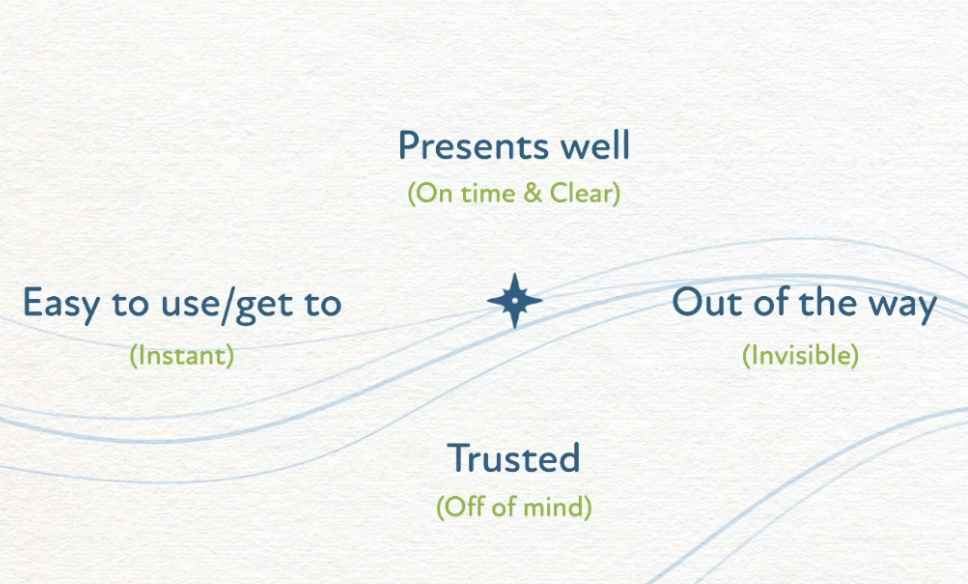
It’s not usually worthwhile to try and organize EVERYTHING. More practically, we choose what to (and what not to) organize. For any given object that’s you trying to organize, its often surrounded by other items. The problem with this is how do you separate the signal (i.e. the item you want to organize) from the noise (i.e. the other surrounding items). With “Presents well” criteria, you can increase the signal to noise ratio by asking the following questions:
Like many other people with ADHD, in order to prevent forgetting about items that I’d like to rediscover in the future, I’ll deliberately place them in plain sight. Unfortunately, overtime, the more I apply this strategy, the more clutter I create.
Now, you might be sharing some similar worry thoughts as me. Often, when items are tucked away — invisible — future me struggles with refinding the item. That happens. So before you simply place an item in a container or box or cabinet or folder, consider counter-balancing “Out of the way” with “Presents Well”, maybe by including a label.
Your body’s resistance to an activity isn’t an obstacle to be overcome … The right solution isn’t to start punching the wall harder, it’s to look around for a tool to help you do the job.
– The late Aaron Swartz
Over the years and even now, I’m continuing to increase awareness around the thoughts that swirl around in my head. And anytime the thought of “JUST TRY HARDER” pops up, I try and hit pause, take a deep breath … because this thought serves as a clue. Though that mantra can sometimes translate to “try again” (i.e. perseverance), it’s not always the case and often, JUST TRY HARDER equates to applying brute force. Nowadays, I’m more keen on changing the surrounding conditions so both reduce frustration and increase ease.
Of the above questions, I find “Can I link to this from a place I’d use” one that I’ve been asking myself consistently throughout the day. By consciously creating links, I am reducing the probability of (as mentioned in the previous section above) losing lingering items and I am increasing the probability of rediscovering them. To elaborate, here’s an example. I recently created an excel sheet to track topics I want to write about: basically content creation tracking. Now, I’ve tried this approach of tracking items in a central location and almost always that central trackers end up decaying, becoming a stale artifact that I fail to maintain. My central writing trackers end up getting abandoned because
But through the concept of linking, I create more than one way to lead me back to the file.
And, as for the question “How can I lean into mastery, it’s helpful to define the steps of practicing mastery:
In short, practicing mastery (in this context) boils down to: how can I make my solution more accessible.
We can lean into it. Sometimes its hard to recognize that things are not going well and it is tempting to just continue doing what I am doing
– Waves of Focus’s Koroush
Finally, to increase the level of trust in our organization solutions, we can ask ourselves the following questions:
Put plainly, the level of trust increases through developing habits and repetition.
If you struggle with “organization” or “productivity” due to a wandering mind (e.g. ADHD), I highly recommend you check out The Waves of Focus online course. And of course, feel free to message me if you have any questions.
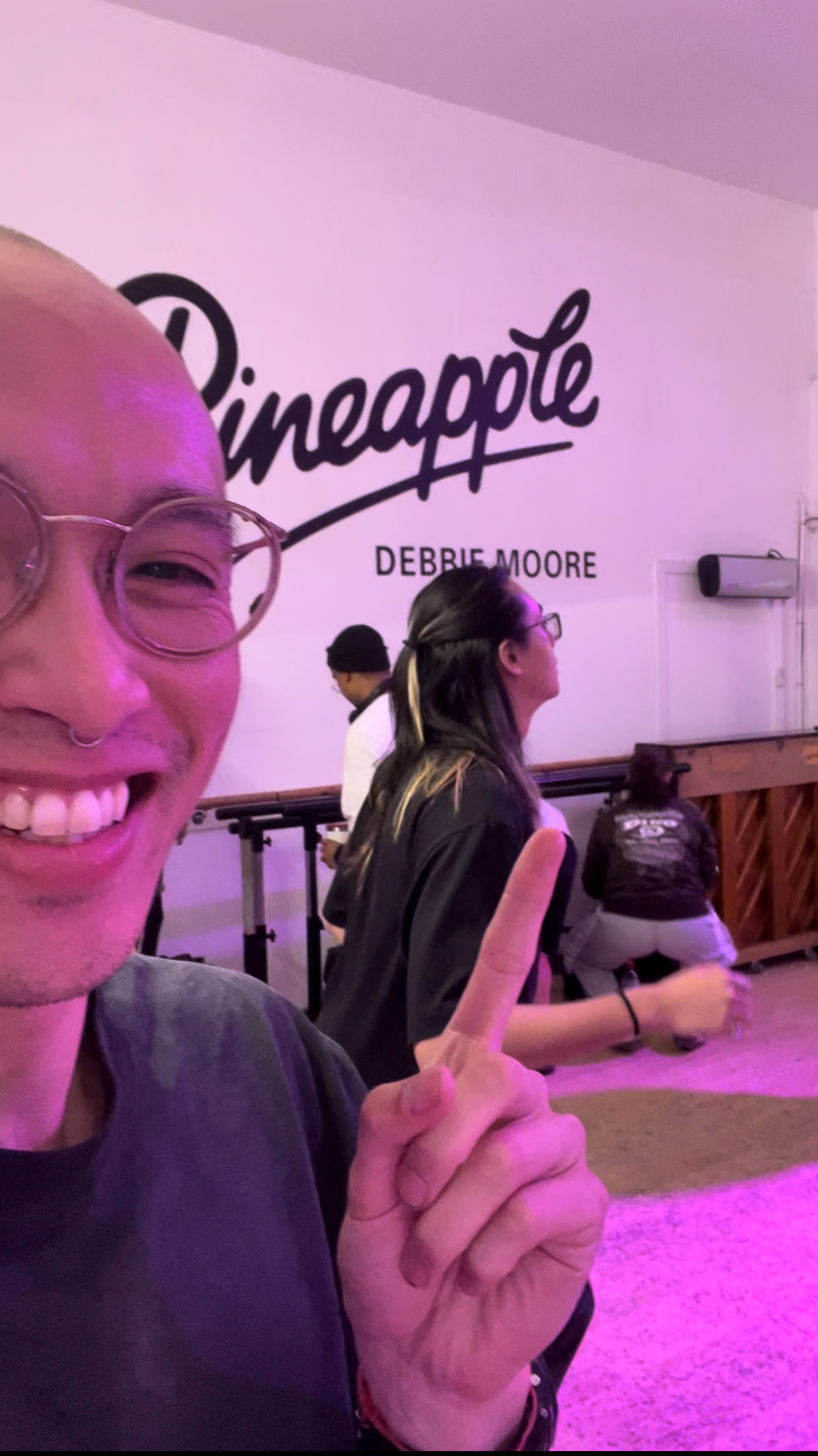
Below is a short review and recap of Ani’s house dance class (beginner/intermediate) that takes place in London every Tuesday night at 6:00pm over at Pineapple Studio. Though I enjoy taking this class every Tuesday, this instance of the class was special because my friend Will (from Seattle, who was visiting London) joined me and I felt so much joy to dance with a friend who I trained with back home.
In terms of difficulty, I found this exercise 10/10. I struggled and fumbled hard, since its really one of the first times I was consciously trying to dance to a different, prescribed rhythm. Normally, whenever I freestyle, I just kind of go rogue and do whatever I feel like. Of course, sometimes that’s totally normal, especially in a social dance scene (e.g. clubbing). However, consciously dancing to a particular rhythm requires a totally different set of skills. This deliberate practice of dancing to a specific rhythm (see below) tripped me up and for the first few rounds and all I was sustain throughout the exercise was more or less stepping in place and even that in itself overwhelmed me.
The count itself was as follows:
1 2 – +4 5+ 6+ 7 8
Separately, as a result of the frustration I felt during the class, the next morning when I woke up, I ended downloading, installing, and learning Music Score to reproduce the rhythm (this in itself was good practice) and slapped my hands together (more on this in a different blog post).
This section serves several purposes.
First, allows me to practice my mental recall. I’m about 4 months into taking choreography classes and my retention is slowly improving. When I took my first choreo class back in April, I fumbled and could barely retain anymore than 2 eight counts and I remembering feeling so frustrating during that first class and a level of resignation.
Second, when I want to refer back to this choreo and practice it, I can. Despite the written choreo below not being precise, I believe that I will be able to practice so as long as its accompanied with the video (below).
So be forewarned, the choreography is not completely accurate and fails to include the counts. That being said, here it is:
Shuffle variation (left side)
Pow wow to the front
Pow wow to the back
Shuffle variation (again) left side
Pow wow to the front – slight variation here and instead of kicking out right leg stick it to the ground and reduce the count
Tap the right foot
Drag – left leg around and hold for 2 counts
Step left foot out
Get into farmer position with right leg bent
Tilt the right hip out and forward – at the same time, shift body weight leftwards back
Return and neutral position
Step right leg back
Step left foot back and toe tap
Transition into squat position
Spin left
Land in pas de bourree position
Pas de bourree to the right but kick out with the left foot
Land and transition into loose leg
Loose leg with jump kick variation (right side)
Loose leg with variation (see new moves section below)
Loose leg with variation to the right
Continue pivoting on right foot for rest of the count
Jack for four bars (i.e. 2 eight counts)
Heel Toe right side
Heel Toe right side
Heel Toe left side (with head tilt)
Heel Toe left side