Category: Dance

  • 1:1 Dance questionnaire

    Below are some questions (along with my answers) asked by Francesa in preparation for our upcoming 1:1 dance private scheduled this Friday. Also included a couple of my favorite dance clips that inspire me.

    • What are 3 house steps that you are comfortable with and use frequently?
      • Pas de bourree
      • Loose Leg / Chase
      • Cross Step
      • Shuffle
    • What are 3 house steps that you struggle with or tend to avoid?
      • Farmer
      • Skate
      • Train
      • Sidewalk, Salsa (and others that I’ve practiced that sometimes don’t make appearances during rounds/sessions etc)
    • Can you identify what in particular you struggle with for those steps?
      • Falling off beat (exclusively with the farmer)
      • Not quite aesthetically where I want it to be (Skate / Train)
      • Inability (or have not yet attempted really) to convey different rhythms beyond the foundational, syncopated rhythmic pattern
      • Develop a groove (where I doing more dancing than steps) that I can dance and intertwine these steps with
      • Often forget that I’ve even trained these steps and thus rarely come out
    • Who are 3 house dancers who inspire you or whose style you enjoy?

      So difficult to name just three so going to toss out a few more at the risk of violating the constraint in the question 😊
      • Brian Green
      • Kwame
      • Yugson
      • Rick Indigo
      • Shan S
      • J Soul Zuberi
      • Rachad
    • Can you identify what is about those dancers that you appreciate?
      • One common theme is the beautiful simplicity in their movements
      • Ability to dance both masculine and feminine energy
      • Laid back while also energetic and crisp and clear
      • Versatility and their ability to adapt to different types of (house) music
      • While the steps are “beautiful”, the ability to gracefully move other parts of the torso
    • Is there anything in particular you’re really keen to get out of this initial session?
      • Curious to hear your observations from the past 3 weeks of Kev’s Kitchen
      • Incorporating double time without looking or feeling so robotic
      • Turns and space without looking robotic / stiff in the torso
      • From the wide array of “elements” (e.g. levels, space, rhythm, musical, isolation, footwork) how to manage training routine and practice and develop them over both the short and long term
  • Dance, discomfort and making mistakes

    Lots of dance activities going on lately and wanted to take a moment to reflect on the journey.

    Choreography volunteer as a dancer for video shoot promotion

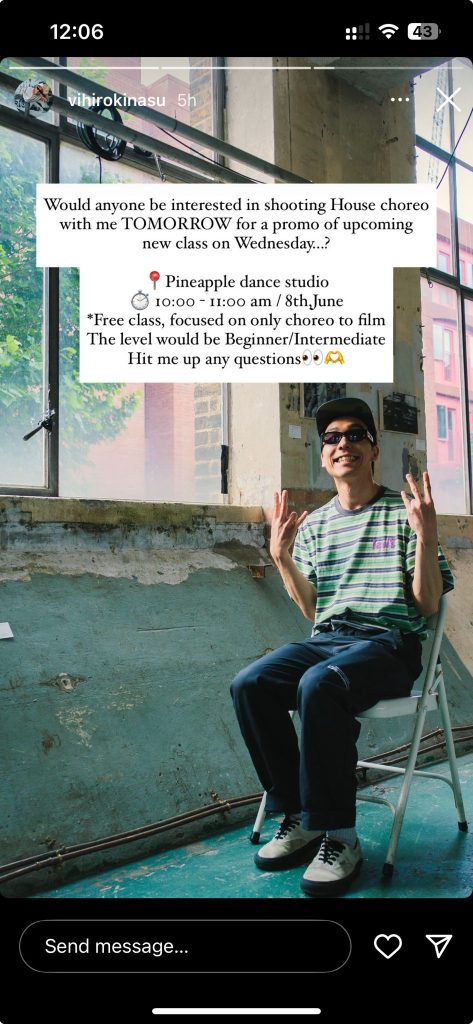
    Last week, Francesa messaged me over Instagram, re-sharing an Instagram story, where Vi (an elite dancer from Japan currently located in London, teaching House and Locking and Hip-Hop) requested volunteers for dancers to come learn his choreography that would be filmed as a promotional video for his upcoming class:

    I received this message late on June 7th, the night before the shoot itself. First, I really appreciated Francesa sharing this with me and the fact that I was even on her radar. Second, I experienced mixed emotions, excitement, joy, anxiety. Excitement that I could be involved in something as cool as this, given that I just entered the dance scene about two years ago. Young Matt would’ve been so elated (I myself now, at 37, am elated). And as far as anxiety, I had thoughts like:

    “I’ve choked before during choreography, what if it happens again?”

    “I’ve never taken a class for Vi … what if his choreography is beyond my level?”

    “Should I just hide in the back? But what if only a couple people show up and there’s nowhere to run?”

    Despite having these thoughts, I not only signed up, but forwarded the screenshot to a couple friends, one of which (Aubrey) enlisted herself as well. Part of the reason (a big one), right around the same time of seeing Vi’s announcement, I had read a series of Jo-L’s stories on Instagram. In a nutshell, he basically stated that while we all know that discomfort and mistakes are part and parcel of growth, despite recognizing that reality cognitively, we tend to make decisions (unknowingly) that keep us in a state of comfort. Though I do believe that I am growing and putting myself out there, I definitely knew that signing up for Vi’s choreography was putting myself in discomfort.

    Not only that, but I had somewhat other anxiety reducing thoughts such as:

    • Even if I choke, so what? You are still whole
    • Everyone messes up sometimes
    • The pros (challenge, learning, growth) outweigh the cons (embarrassment)

    In the end, I did it and thrived and nailed the choreography. Not only that, instead of lurking in the back, I positioned myself up front, no where to hide. Finally, even if I did flop, I would’ve been proud of myself either way.

    Some takeaways

    • Starting the loose legs on on the “2” (instead of the “1”) – Almost always, I start the loose legs at the start of a bar. It’s quite common for us (house) dancers to begin our movement on the first downbeat. However, Vi started the choreography with performing a little hop on the “1” and the on the “2”, starting the loose legs. This change of timing is something I’ll take away as a learned lesson
    • Tilting torso to the left while hopping on the right before the shuffle – this was an unusual move for me, one that I’ve yet to perform before. When he demonstrated the move initially, I could not at first identify what I was doing different when comparing my figure in the mirror to his. Eventually, I paused and watched carefully and noticed that he was not rotating his trunk and instead, facing forwards and only ever so slightly stretching the top left of his body
    • Applying a different variation to the tic tac toe movement – I took away a new rhythm and a variation that I like and will drill and incorporate into my freestyle (I did already actually, during Kev’s Kitchen a couple days ago, which I’ll blog about shortly)

    Challenges during choreography

    • Salsa step and then hop
    • Additional “stutter” steps between pas de bourree transition into the salsa step
  • London House Dance Workshop Summary

    I attended a house dance workshop lead by Samantha Mavinga. The workshop took place in London last Sunday on May 25th and ran for 3 hours and though I’ve attended other workshops in the past, this one felt particularly special:

    • Trained with Mavinga previously in 1:1 and so I’m familiar with her work
    • I DJ’d for the self-exporation and cypher portion of the workshop
    • I created a recap video using my DSLR

    Exercises revolving around the “Shuffle” movement

    We started the workshop with a breathing exercise, and was asked to envision (while our eyes were closed) of our safe space. Following this tapping in exercise, she revealed that we’d be focusing on a single move throughout the entire workshop: the shuffle.

    I love the fact that we focused on a single foundation move because she’s providing us with a template that can be further applied to other foundational moves. It’s like teaching us how to fish.

    1. Controlling and strengthening feet required – an exercise she had taught me during our 1:1 privates. Good refresher and reminder.
    2. Rhythm patterns – simple, syncopated, double time, 1/16th notes. I was familiar with this and actually had practiced this rhythmic pattern not only with other foundation moves (e.g. pas de bourree, cross step) but also had practiced it a bit with shuffle as well
    3. Repeating the movement on the same side (instead of switching from left to right or vice versa) – I really like this technique
    4. Combining shuffle with roger rabbit – though she combined the shuffle with roger rabbit, taking components from each one, I imagine so many opportunities where I can combine shuffle with other moves like pas de bourree and cross step
    5. Leveraging control and strengthening to stretch out and slow down the shuffle
    6. Moving up and down across the four levels – I really struggle with transitioning from level 3 (the penultimate level) and level 4, on the ground.
    7. Taking up space by traveling with the movement – I got some nice feedback from her that I was prematurely kicking out (i.e. initiating the shuffle) the non jumping leg
    8. Transition between Peter Paul on left side to right side – lovely move and transition and feels unnatural to me and will require lots of practice in a slower tempo

  • On Practicing Footwork

    Very rarely, even after 2 years of dancing house, do I throw in footwork heavy dance moves like heel toe or farmer. However, I’ve recently been motivated for forward for several reasons:

    1. About 2.5 weeks ago, I learned how to (finally) farmer on beat – historically I’ve been so focused on how the move looks and the overly focused on the aesthetic of the move. However, during my dance lesson with Chiara (MASH), she demystified the movement by providing me a different target, which was the rhythm of the move.
    2. Identified what specifically I’ve disliked about the aesthetic of my heel toe – often I’ll re-watch my videos and struggle to pinpoint what it is specifically that I don’t like about the aesthetic of the heel toe movement. But while watching a series of YouTube tutorials, I recognized that it’s not my hip movement, it’s not the jack: it’s the (lack of) dorsiflexion in the base foot. Up until now, despite having both the flexibility and mobility, I have not been loading base foot. When I do deliberately shift my weight and dorsiflex, the consequence of that the opposite leg (the one performing heel toe) extends further away from the body, making it more obvious that I am actually performing a heel toe movement. Secondarily, I’m now feeling the burn in my thighs. So much of dance, I believe, is body mind connection and awareness.

    The heel toe practice was inspired by watching the following YouTube tutorial

    What I like about the above YouTube tutorial is the way he constructs the drills. It’s a reminder to:

    1. Start at a slower tempo
    2. Start with doing the move 8 counts, followed by 4 counts, followed 2 counts
    3. Practice looping the movement over and over and over again and see how many loops you can do without making an error

    One thing missing from the above video that I decided to inject into my practice is after drilling the heel toe movement, try and connect it with other moves I am familiar with. As you can see in the first video above, I transition in and out of heel toe and the farmer. While it’s great to practice the move in isolation (which has its purpose for refining the movement), it’s easy for me to forget why I am drilling which is of course: to dance.

  • Tuesday House Dance Training Recap (May 13, 2025)

    Who attended?

    Elena, Aubrey, Jimmy, Alex

    What went well?

    I really liked this exercise I came up with, where each person chooses a rhythm in their own mind, danced their rhythm, then ever other person in the group attempts to guess their rhythm. This was fun, challenging, and engaging. Perhaps next time increase difficulty by adding music?

    What did I learn?

    The warm up exercise — where we each take turns in taking a single foundation and adding a variation — seems to cause all of us to drop out of sync. And I don’t think this has to do with the (lack of) technical skills of people in the group because from my perspective, everyone is seasoned (even more experienced than me).

    That the prompt of “continuous flow” seems to significantly shift my dance in a positive direction during my rounds. This reminder tends to be given by Elena, who was there the first time Jake had prompted me and we all witnessed a radical change in my movement during my cypher round.

    Feedback

    • Elena asked if we could integrate the upper body and lower body (instead of two separate circuits) workouts

    Some action items

    • Upgrade the rhythm software to toggle or disable the metronome
    • Upgrade the rhythm software to do 8 counts, where two different 4 counts combined
    • Want to have more self exploration time
    • Think about doing repetitions instead of only time – multiple folks tend to like to hit the target. On one hand, yes, give the people what they want. And second, curious if folks can continue challenging themselves. Perhaps we can have both?

  • An analytical mind in the context of dance – friend or foe? Perhaps both?

    These days, I’m learning how to work with this vessel, my body. I’m constantly weighing the balance between acceptance and change and generally speaking, I sometimes tend to over-index on changing myself (in spirit of growth). In spirit of leveraging the way I am wired, I’m practicing leveraging my analytical mind in the context of dance. Often, we’re told as dancers to “shut off the mind” because thinking too much during dance can in fact impede your ability to move. This is true in many contexts and situations.

    But how can I honor the part of my brain that is analytical? This has been on my mind lately especially after my 1:1 dance lesson with Jevan, who nonchalantly said “What if [having an analytical mind] can be your superpower [in dance]?”

    Identifying rhythmic challenges during dance class

    One of the many benefits of attending dance class is that they can sometimes reveal and help you become aware of weaknesses, or opportunities for growth. And last week, during Jevan’s class that I attend ritually, I noticed that I was struggling just a tad with identifying rhythmic patterns that were a bit more complex than the typical “1 and 2 and 3 and 4”. For instance, when he shouted (something along the lines of) “4 and 2 3”. At the same time, I struggled to clap the rhythm while dancing at the same time.

    Writing a software program to practice identifying rhythmic patterns

    Following the class, the next morning, I had the thought to do some ear training (similar to how when I took singing and guitar lessons for years, I’d practice singing major and minor scales) by writing my own little piece of software.

    The command line program essentially generates a random rhythm and repeatedly plays the rhythm with kick drums and high hats. I for now initially constrained the program to only play 8 notes — 1 bars where each note is an eighth note — which means there’s a total of 256 rhythmic patterns. This constraint seems sufficient (for now) to train my ears since doubling the number of bars — from 1 to 2 bars, a total of 16 notes — would increase the total number of rhythmic patterns to 65,536.

    Implementation details

    I define an 8-bit map and then generate all the possible computations. Then during each invocation, a random rhythmic pattern is chosen. For each bit in the bit-map, if the bit is flipped, a sound will be played. The type of sound depends. If the bit’s position sits either any of the whole notes (i.e. “1 2 3 4”), then a kick drum sound plays. In contrast, if the bit’s position is on any of the “and” (

    Anyways, for 8 counts, there’s a 8-bit map, each bit representing an 8th note. if a bit — possible value is zero or one — is set (i.e: one), then a sound will be played. On the 1 2 3 4, sound of a kick drum. On any of the “and” a high hat.

    1 0 1 1 0 1 1 0

    This rhythm, converts to words, equates to:

    “ONE … TWO and … and FOUR”

    Of course this is ear training but I am incorporating this into my practice. It’s a tool. It’s not meant to replace listening to music. But I am finding that being able to identify the rhythm with the program seems to improve my ability to identify rhythmic patterns of certain instruments in real music tracks.

    One other addition I made to the program. Since it can be challenging to identify when the bar starts — since I initially only played a kick drum and high hat — the program always play a metronome sound, a “click”, on the one. Eventually, I made relax this and remove it.

  • Juste Debout: 1 month of training for 1 minute of dancing

    Juste Debout: 1 month of training for 1 minute of dancing

    Tomorrow, I compete as a dancer in the infamous international street style dance competition — Juste Debout — and for the past 1 month, my 2 vs 2 partner (Aubrey) and I been consistently training together. Every week her and carved out 1.5 hours, time spent in a studio practicing. And now, all this comes to a crescendo in about 24 hours, when we take the stage in London and dance for a grand total of 60 seconds.

    This past month has been quite a journey. High highs. Low lows.

    And along the way, I felt a bit stuck with my dance, hitting an invisible plateau. Despite moving my body more, I ironically felt more disconnected with my dance, I felt a bit more performative, a bit more robotic.

    Thankfully, I rode out this anxiety and frustration and ultimately, the universe had my back. During this period of disconnection with myself, I happened to have one off dance private with Jevan. And during our 60 minute lesson, he fundamentally shifted the way I approach my dance. Up until that point, my focus and intention was, in this order:

    1) Demonstrate I can dance the fundamental and foundational moves in this style we call house dance and

    2) Sprinkle some of my own personality into the movement.

    However, he had me invert the two, prioritizing dance first and that unlocked something in me and I’m now back to enjoying dance a bit more. My dance rounds — when looking back at the footage — have much more of me in it. There’s more clarity. More conviction.

    But I digress.

    Over the past month, I documented our training journey and below are four short clips of each week.

    Training Week 1

    Training Week 2

    Training week 3

    Training week 4

  • Friday night farmer

    The house dance farmer move is one that eludes me. I’m about 1.5 years into my house dance journey and this move in particular is one that I both struggle to achieve both the look and the feeling. Because of this, the farmer rarely makes an appearance in my freestyle rounds and when it does, and I replay the footage, I dislike how the move looks on me.

    That being said, my farmer has progressively improved and I don’t feel like I’m too far from nailing it. Since the beginning of my journey, here’s some of the ways I’ve tried to tackle the farmer:

    • House dance classes in Seattle – Orb often demonstrates this move as part of the foundational warm up
    • Feedback from Kerry (Karina) House – I took 1:1 private lessons with her for about 1 year and during that period, during our remote privates we went over the farmer and sometimes I would send her videos (over Telegram) for feedback
    • House dance classes in London – In both Ani’s and Jevan’s class, they often will include the farmer in either the combo or choreography. They do go over some techniques and yet I still struggle
    • Watched (god knows how many) YouTube tutorials
    • Analyzed video clips of a handful of people performing farmer – I try and breakdown and dissect and analyze the body mechanics

    But last night (Friday night), I was chatting with a friend (Kristina) who sent some of her own personal written notes. These notes combined with a YouTube tutorial (below) makes me feel like I am on the right track

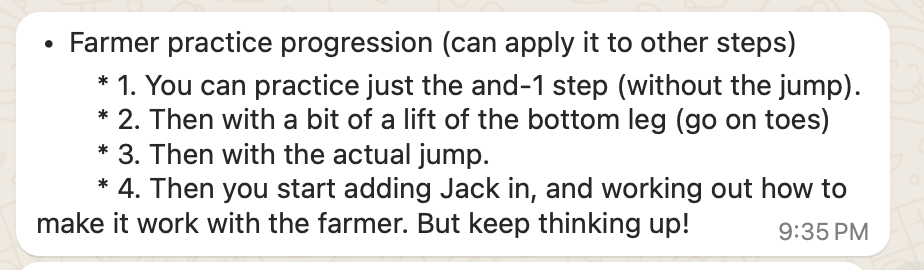
    Farmer Progression

    YouTube Tutorial on Farmer

    I believe the language he’s speaking is Russian. Because I cannot understand, I turned on auto-captions and was able to follow along. What I learned from the above video is this:

    • When lifting leg, shoot pelvis back – this is something I noticed when analyzing videos but in other tutorial videos I’ve watched so far, nobody has explained this part of the movement
    • When lowering the leg, tap with the toes – I’ve been missing this component and going to experiment with incorporating this into my farmer
    • After tapping with the toes, flatten foot and (lightly) hop – related to previous point but I would hop on one foot but was missing the intermediate step of the toe tap
  • House Dance Training Log – January 04, 2025

    House Dance Training Log – January 04, 2025

    First training of 2025. In a separate post, I’ll go over one of my 2025 goals but in short: participate in the prelims of summer dance forever 2026! That is, 1.5 years from now, I’d like to stand up on that beautiful stage and be prepared both mentally, physically, and emotionally.

    Summary

    • Light warm up – 90 seconds of “jump roping”, 15 seconds single leg hops on each
    • 2 rounds of 6 exercises, each exercise 30 seconds, with 10 second rest in between
    • Rhytmic pattern training (30 seconds per round) of 6 exercises, 2 rounds (one pas de bourree and one cross step)
    • After training for dance, stretched hamstrings, hip flexors, and quadriceps (and some calve raises and eccentric heel drops)

    Motivational quote on practice

    Stumbled on this quote that a fellow HN (hacker news) user commented:

    As to progress — we don’t know how much progress we made, actually, but if you practice it you will realize — some day you will realize that our progress is not — it is not possible to make rapid, extraordinary progress. Even though you try very hard, you cannot actually make progress. The progress you make is always little by little. It is like — to go through fog. You don’t know when you get wet, but if you just walk through fog you will be wet, little by little, even though you don’t know — it is not like a shower.

    When you go out when it is showering you will feel, ‘Oh, that’s terrible!”. It is not so bad but when you get wet by fog it is very difficult to dry yourself. This is how we make progress. So actually there is not need to worry about your progress. Just to do it is the way. It is, maybe, like to study language. Just repeating, you will master it. You cannot do it all of a sudden. This is how we practice, especially Soto way, is to do it little by little. To make progress little by little. Or we do not even mind, we do not expect to make progress, just to do it is our way. The point is to do it with sincerity in each moment. That is the point. There should not be Nirvana besides our practice.

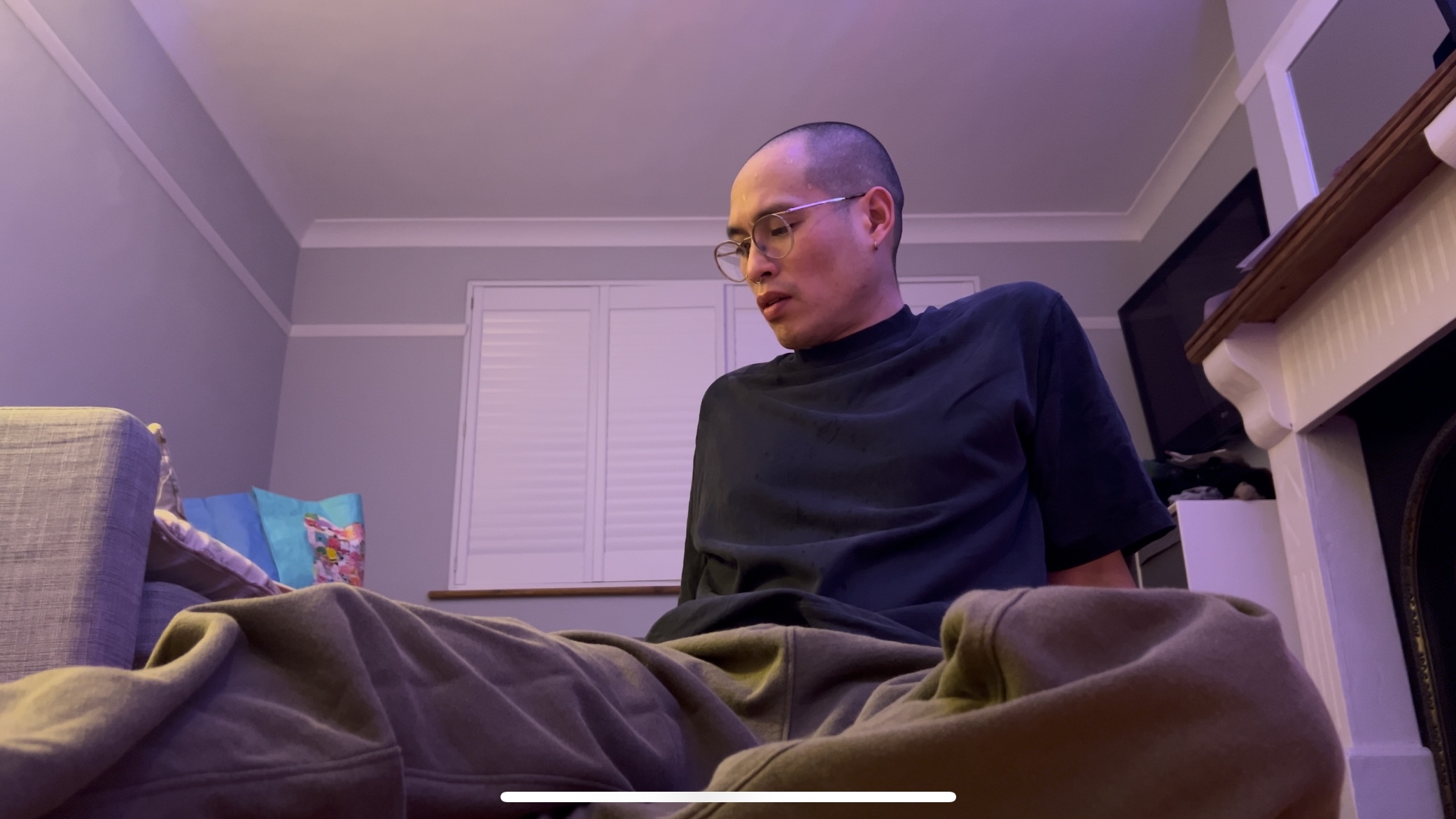
    Video Log

    Reflection

    • First time dancing after taking 2 weeks off to allow rest and recovery from plantar fasciitis (not fully healed)
    • (Right) foot felt no pain in heel throughout exercise but afterwards, felt a bit sore so I walked on my indoor garden gravel and then stretched afterwards
    • Felt a bit anxious during physical warm up, hesitating as to avoid reinjuring myself
    • Proud that I did not go 150% percent (my default mode) and limited the entire practice to just under 35 minutes
    • Avoided using ankle weights since that additional load likely contributes to the plantar fasciitis and in fact, during the exercise where I jumped side to side, I felt instability in the ankle and knee

    What went well

    • Was able to recall the rhytmic exercise that Mavinga provided
    • Mostly on beat
    • Just showing up and putting in the quiet work

    Areas of improvement

    Below section will serve as input for next training (TBD)

    • Practice “around the world” move – when the prompt from random generator (software I wrote to help train transitions) spat out “around the world”, I ended up performing the setup move. In a nutshell, forgot how to execute the move
    • Relax arms during dodger (and more generally) – was only bending right arm. After checking some videos online to compare, I like the aesthetic of bringing both arms up into 90 degrees (relaxing the wrists) during the first step, then lowering both arms in sync during the last step of the move
    • Hold the 3rd rhythm a bit longer during cross step rhythmic practice – doing so distinguishes one rhythmic pattern to the next. Being compassionate with self; in the past, I would’ve berated myself for having to “relearn” this since I had cleaned it up previously. But that’s neither here nor there. Next session
    • More tension / energy all around – make the moves look more crisp and clear. For example, during the “Bart Simpson”, contract the hamstring and glutes for more aesthetically pleasing movement
    • Increase knee bend with Drunk Walk
    • Drunk walk backwards
    • Freestyle – I was gased and wanted to not push too hard so didn’t freestyle. Something I may be able to do in between next training session
  • Styling arms in house dance

    This morning, I re-watched a video that I recorded the night before, while practicing dancing some house dance. And what stood out to me the most was not my footwork, but my arms. In particular, something seemed “off” about the positioning of my fingers as well as the angle in my arms. Given arms is not a topic frequently covered in house dance, I decided to draw inspiration from ballet and contemporary to see what those styles teach because I’m sure there is some theory behind placing the arms in such a way that is aesthetically pleasing.

    So the main take away from watching a series of YouTube videos this morning is that:

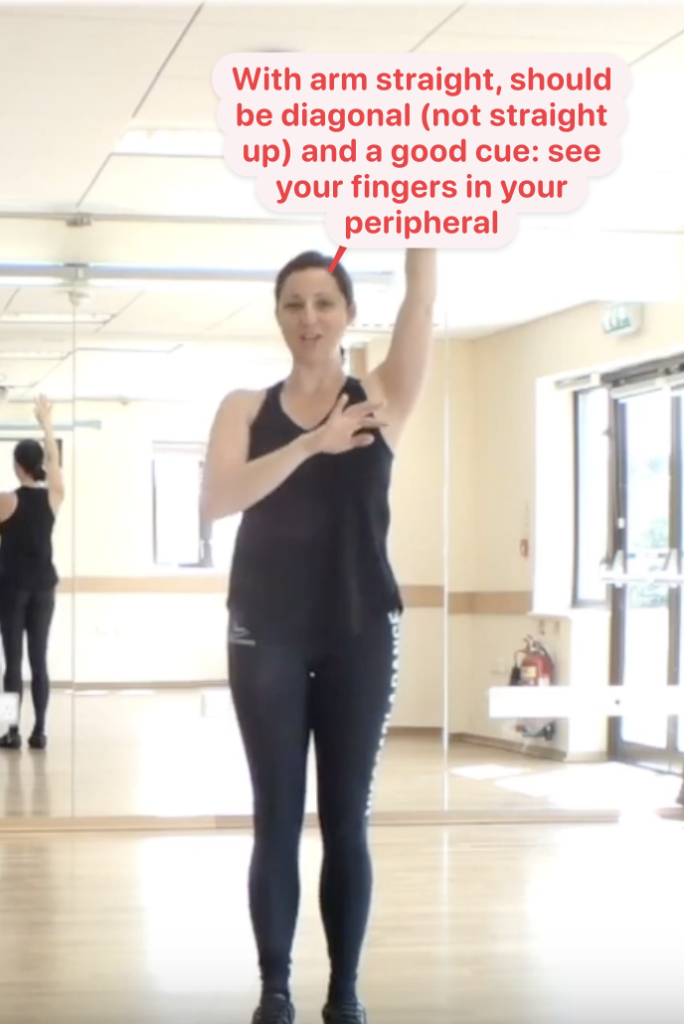
    • Arms are always at a diagonal (even when you think they are straight)
    • Engage the shoulders
    • In ballet, elbows should be raised above wrist

    From Pole Dancing

    • Generate the movement from the shoulder blade, initiating from the back

    Contemporary

    Arms

    • Arms out to the side is not actually a straight line
    • Arms protruding slight in front of you
    • Similar concept with arms up, you want to keep the shoulder position natural and therefore keep arms out slightly in front

    Legs

    While watching the video on arms, the YouTube recommendation engine suggested a video on theory of legs which I found just as interesting

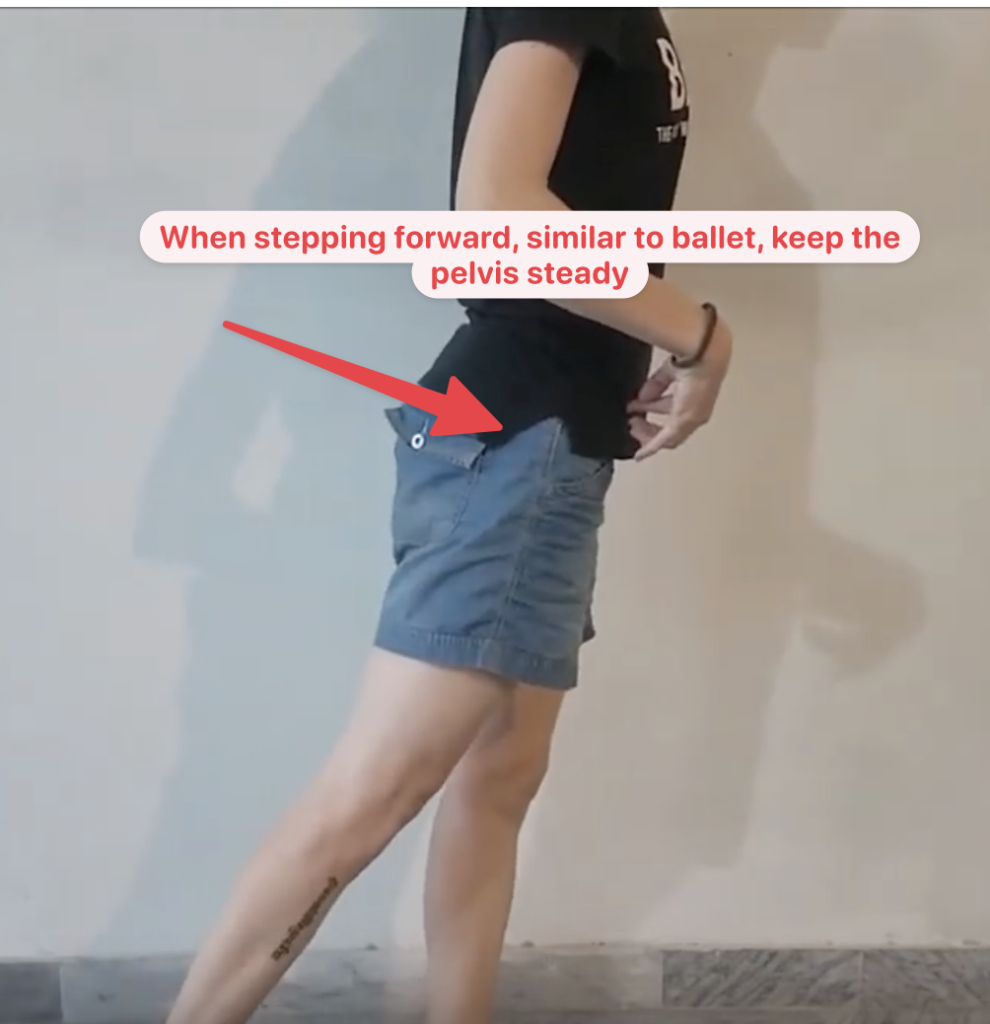
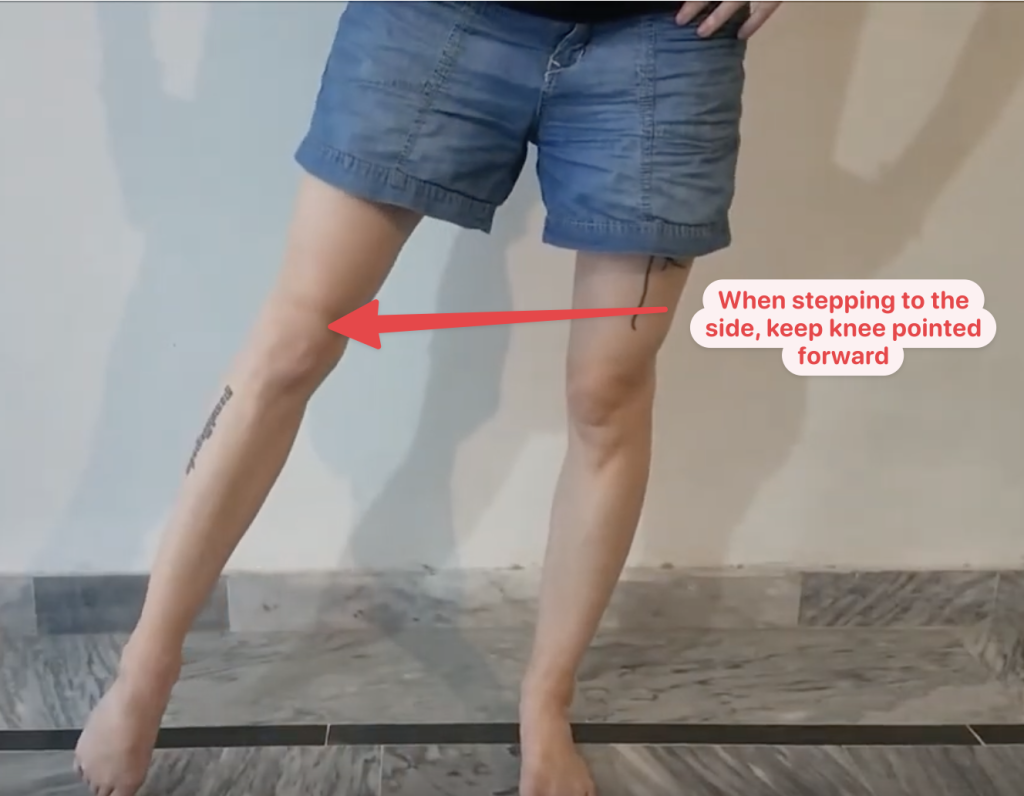
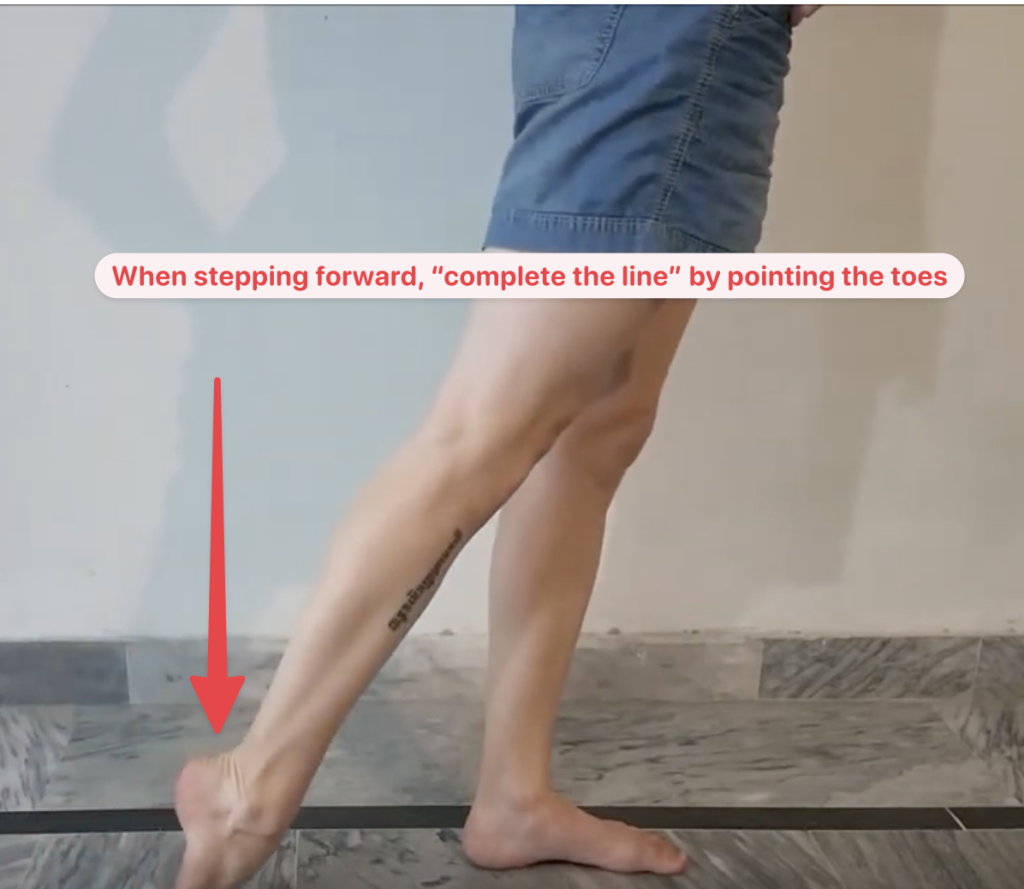
    • When extending leg out in front, lead with the knee
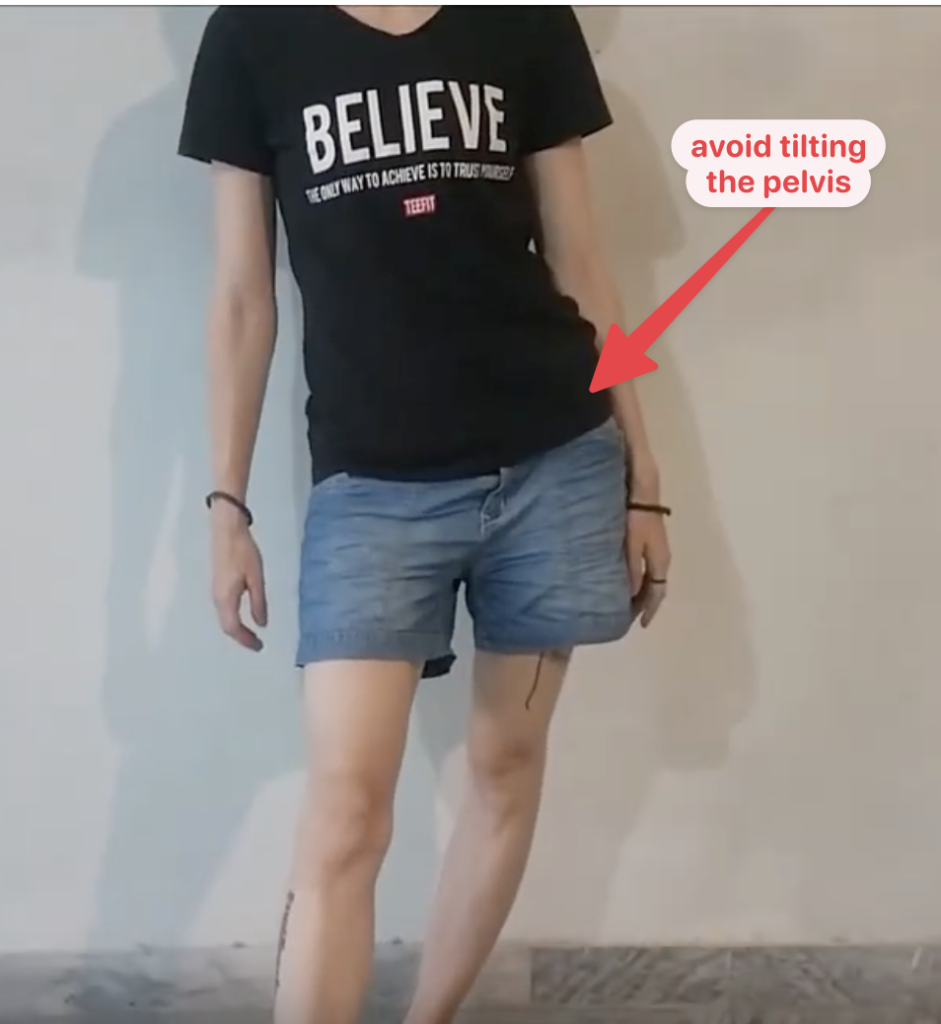
    • Avoid tilting the pelvis
    • Squeeze muscles of thighs and inner thighs and glutes so you are pulling / dragging the leg instead of just picking them up and plopping them

    Jazz Arms

    • When extending arms up and out, a good cue is that you should be able to see your fingers in your periphery

    Ballet

    • A couple different analogies and metaphors including squeezing your hand through a glove
    • Shaking your hand vigorously and then in the last moment, however your hand lands, that’s how it should look
    • Mind is blown right now in her statement “if you have tension in your hands it means you aren’t using your shoulder blade muscles enough”